
It was a difficult quarter for low-risk investors. Discipline is usually tested by holding through a decline, yet this quarter tested it by sitting out a melt-up. An investor who holds through volatility feels prudent; one trailing a euphoric market feels left out, though both are doing the same correct thing.
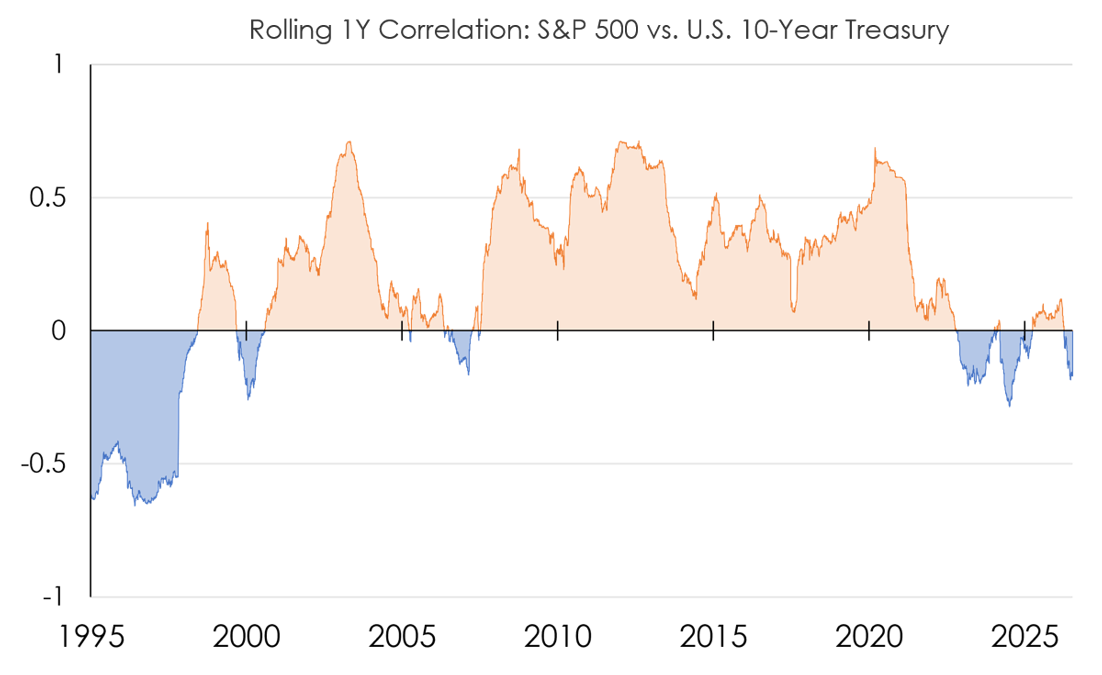
Pre-Covid, inflation was too low, shocks were deflationary, and bonds were free insurance since monetary policy fights recession and deflation simultaneously. Post-Covid, the shocks are inflationary, and inflation that hurts the economy hurts the hedge.
We warned at year-end that traditional defensive assets had become less reliable. Gold then lost value during a military crisis in the first quarter and had its worst quarter since 2013 in the second. However, this coincides with a reversal of speculative interest, which allows gold to return to its previous risk characteristics.
A conservative portfolio must spread risk across many imperfect hedges, sized by what they can bear. Intermediate Treasurys remain useful, providing enough yield and duration to cushion an equity decline without the long end's exposure to deficit-driven supply. TIPS, minimum volatility equities, real assets, and international diversification each carry a necessary share of the defense.
Source: Bloomberg